Disclaimer: This analysis is based on active supply chain audits and quality control data managed by V7proX. It is intended to help B2B importers understand production variables, manage repeat orders, and standardize long-term supplier relationships.
There is a recurring pattern we observe when evaluating mature supply chains for our clients. A buyer finds a capable manufacturer, receives a flawless first shipment, and successfully launches the product. The second order is generally consistent. However, by the third or fourth repeat order, subtle discrepancies begin to appear.
The fabric feels slightly thinner. The upholstery foam loses its resilience faster. The hardware lacks its original weight.
In the sourcing industry, this phenomenon is known as quality fade China manufacturing. It is rarely a malicious act of deception by the factory. More often, it is a predictable operational response to market variables. Here is an objective look at why this happens and how experienced buyers mitigate it.
1. Why Chinese Factories Change Materials on Repeat Orders
When a buyer experiences quality fade, the immediate assumption is often that the factory is trying to cheat them. While genuine factory bait and switch does occur, the reality is usually more mundane: it is an exercise in margin preservation.
Consider the raw material market. The cost of nylon, polyurethane foam, and steel fluctuates constantly. According to global tracking indexes like Trading Economics, industrial raw material prices can shift by 5% to 10% within a single quarter.
If a buyer demands that the factory maintains the exact same unit price from 18 months ago despite rising material costs, the factory is faced with a choice. They can either refuse the order (and lose the client), or they can quietly alter the Bill of Materials (BOM) to protect their baseline margin.
Most factories will choose the latter. They view it as solving a math problem. If they cannot raise the price, they must lower the cost.
Quick Signs Your Supplier Is Cutting Corners
You may already be experiencing quality fade in your repeat orders if:
- Fabric GSM suddenly feels lighter or loses elasticity faster.
- Upholstery foam loses its resilience faster than previous batches.
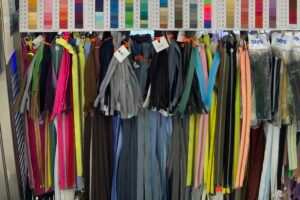
- Zippers or hardware no longer use branded components.
- Carton packaging becomes noticeably thinner over time.
- The factory starts resisting or delaying mid-production inspection requests.
2. Common Examples of Quality Fade in China Manufacturing
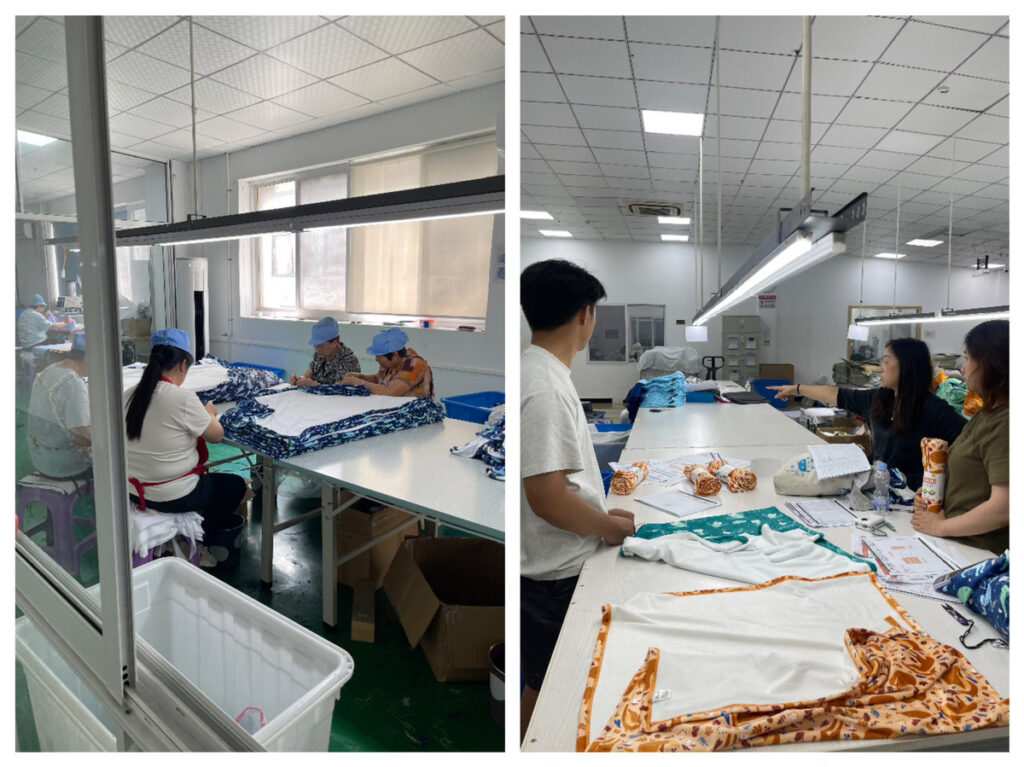
Quality fade is rarely obvious; it happens in the margins. During our recent warehouse inspections in Guangdong, we documented several common instances where components were quietly substituted during repeat production runs.
In Custom Apparel (Dongguan): A client reordered a successful line of seamless leggings from a high-end activewear manufacturer. The factory did not change the design or the color. However, when our inspector checked the fabric weight, we noticed a GSM variance. The factory had shifted the blend from a 220 GSM premium nylon to a 200 GSM polyester-heavy blend. The visual difference was zero, but the functional elasticity was compromised.
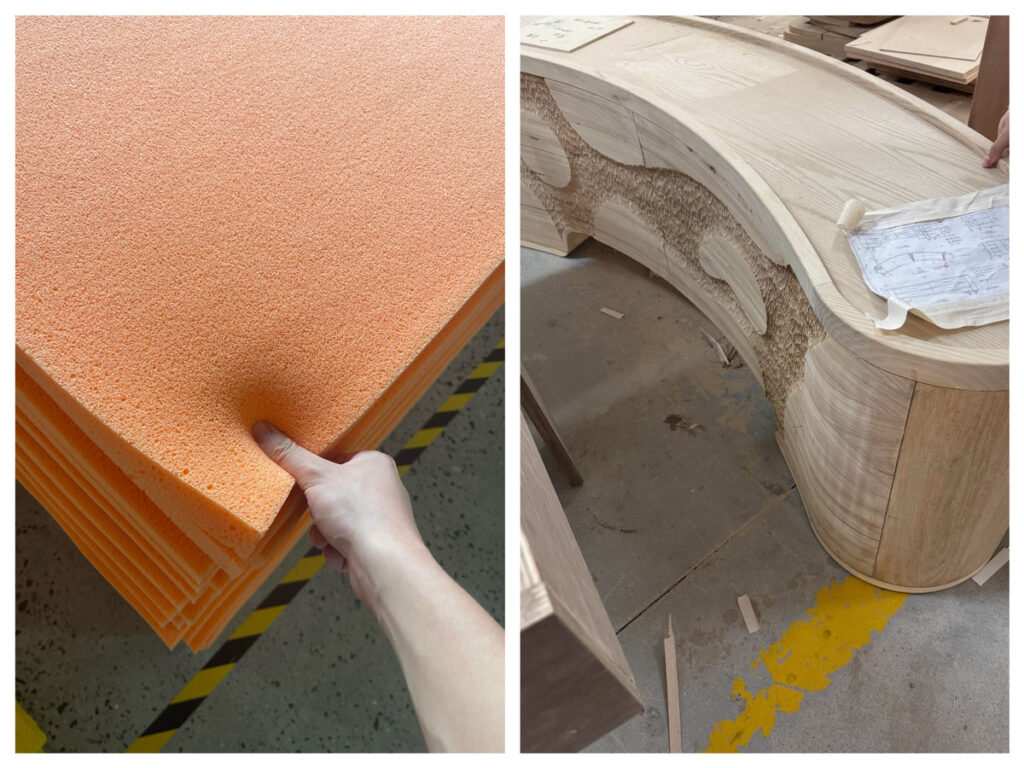
In Commercial Furniture (Foshan): A buyer specified “high-density foam” for a commercial sofa project sourced from the Foshan furniture market wholesale district. For the first order, the factory used 45D high-resilience foam. By the third order, our inspector physically cut open a cushion on the assembly line and found 35D standard foam. The term “high-density” is subjective unless mathematically specified in the contract.
| Component Category | Initial Order (Golden Sample) | Observed Quality Fade (Repeat Order) |
|---|---|---|
| Activewear Fabric | 80% Nylon / 20% Spandex (220 GSM) | 75% Polyester / 25% Spandex (200 GSM) |
| Upholstery Cushioning | 45D High-Resilience Virgin Foam | 35D Standard Foam or Recycled Off-cuts |
| Apparel Hardware | YKK 5# Nylon Zippers | Unbranded Alloy Zippers |
3. The Trade-Off: Price Stability vs. Material Integrity
It is important to acknowledge a fundamental trade-off in manufacturing: absolute price stability over long periods is generally incompatible with absolute material consistency.
If a factory informs you that raw material costs have increased by 8%, pushing back aggressively to maintain your previous pricing may inadvertently invite quality fade. A sustainable approach to managing China supplier relationships requires occasional pricing adjustments to ensure the factory does not feel compelled to source sub-standard components just to keep your account active.
4. How to Prevent Quality Fade in Repeat Orders
Preventing quality fade requires shifting from relationship-based trust to specification-based verification. Many buyers assume a signed Purchase Order locks in the quality. In practice, a PO is often treated as a general pricing guideline on the factory floor unless strict parameters are established.
To mitigate variance, the exact BOM specifications must leave no room for interpretation. Instead of writing “durable fabric,” specify “100% Organic Cotton, Reactive Dyed, 240 GSM.” Instead of “quality zipper,” specify the exact brand and model.
Furthermore, relying solely on pre-shipment inspections means you are checking the goods when they are already finished and packaged. By this stage, structural material changes cannot be easily verified or corrected. Implementing a mid-production inspection—when the raw materials are physically on the floor but before final assembly—is the most reliable operational control.
5. Reviewing Your Current Production Baselines
If you have noticed subtle discrepancies in your recent shipments, it may be necessary to re-evaluate how your product specifications are being communicated and verified at the factory level.
At V7proX, we act as a neutral, localized auditing presence in China. We help commercial buyers formalize their tech packs, conduct on-site raw material verifications, and ensure that your repeat order quality problems are identified and eliminated before assembly.
Frequently Asked Questions (FAQ)
Answer: Yes. In most cases, it is a response to fluctuating raw material costs. If a factory faces a 5% increase in nylon or steel prices but is constrained by a fixed unit price from the buyer, they may subtly alter the component composition to maintain their operational margins, assuming the buyer will not notice the difference.
Answer: It depends entirely on how the contract is written. If the Purchase Order uses vague terms like “premium fabric” or “high-density foam,” the factory has legal and operational flexibility to interpret those terms. If the PO specifies exact metrics (e.g., 220 GSM, 45D density), any deviation is a clear discrepancy.
Answer: A mid-production inspection occurs when raw materials have arrived at the factory but before final assembly begins. This allows an inspector to physically verify the brand of zippers, measure the GSM of the fabric rolls, and check the density of the foam before they are permanently integrated into the final product.
Answer: A requested price increase should be evaluated objectively. If the factory can demonstrate that global commodity prices for your specific raw materials have genuinely increased, accepting a marginal price adjustment is often the necessary trade-off to ensure your product’s material integrity remains consistent.
Answer: A standard pre-shipment inspection by a third-party agency is often too late in the process, as the goods are already packaged. To effectively prevent quality fade, you need an integrated approach: a highly specific Bill of Materials (BOM) combined with random mid-production material audits based on strict AQL (Acceptable Quality Limit) standards, conducted by a specialized sourcing partner.