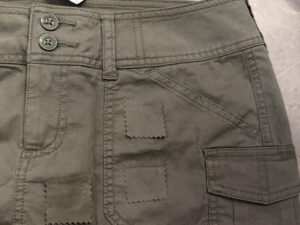
Finding an activewear manufacturer in China is relatively easy. A quick search will reveal thousands of suppliers claiming they can produce leggings, sports bras, yoga sets, and performance apparel.
The difficult part is not finding a factory. The difficult part is finding a manufacturing partner who can maintain the exact same product standard from the first approved sample to thousands of units in bulk production.
For emerging fitness brands and private label developers, most production failures do not happen because the initial design is wrong. They happen because critical supply chain decisions are made too early or without proper oversight. Common pitfalls include:
- Wrong fabric selection for specific performance needs.
- Unrealistic MOQ (Minimum Order Quantity) expectations that force factories into shortcuts.
- Insufficient sample testing before mass production.
- A lack of inline production monitoring.
After working with overseas brands on product development, fabric sourcing, and factory coordination, we have found that activewear production requires a fundamentally different sourcing approach compared with standard apparel.
Below are seven production risks brands should evaluate before placing a bulk order with an activewear manufacturer in China.
1. Not Every Clothing Factory Can Produce Technical Activewear
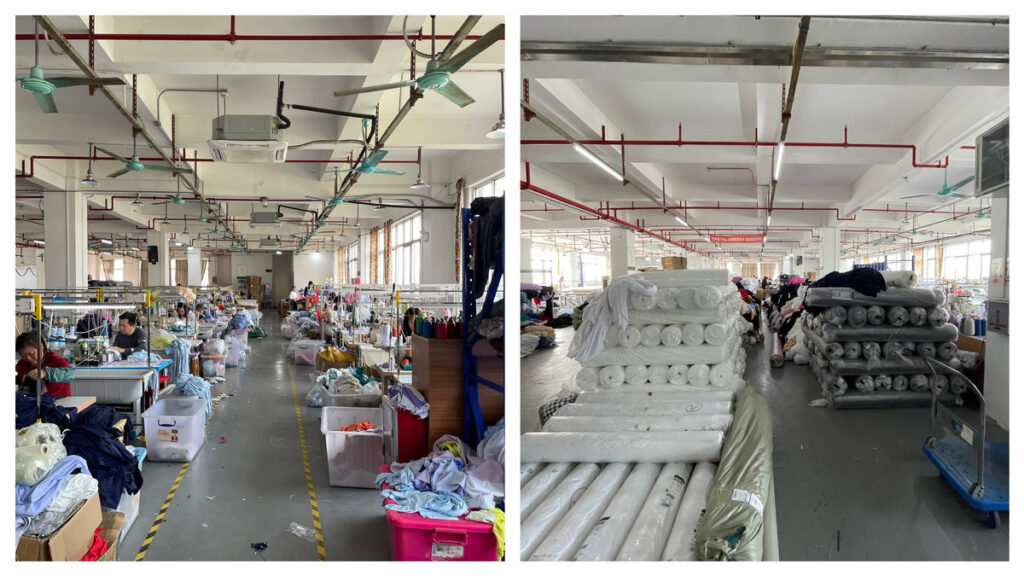
A common misunderstanding in apparel sourcing is: “If a factory can produce cotton T-shirts, they can also sew activewear.” This is incorrect. Activewear requires entirely different production capabilities, machinery, and technical handling. A factory producing casual garments may have excellent sewing skills, but performance apparel requires a different level of technical experience.
For example, a sports bra is not simply a smaller top. It requires elastic recovery control, structural support, correct thread tension balance, and comfort testing during body movement.
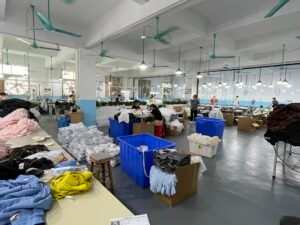
When evaluating a potential activewear supplier in China, brands should look past the marketing materials and check specific technical capabilities:
| Evaluation Area | What to Check on the Factory Floor |
|---|---|
| Sewing Equipment | Do they have 4-needle 6-thread flatlock machines necessary for stretch seams? |
| Fabric Handling | Can they demonstrate experience handling high-stretch nylon/spandex and polyester/spandex blends without puckering? |
| Pattern Development | Does their pattern maker understand compression scaling and dynamic body movement? |
| Quality Control | Do they perform inline stretch, recovery, and seam strength testing during assembly? |
2. Fabric Selection Determines Product Performance
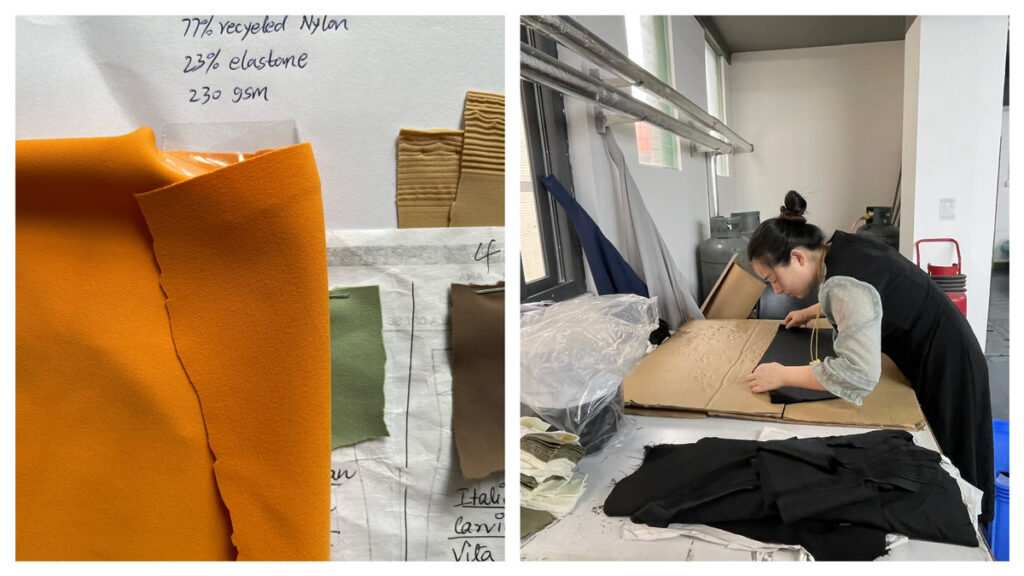
Many activewear production problems start before the sewing machines are even turned on. The fabric may feel premium during a showroom sampling meeting, but completely fail during actual consumer usage.
When activewear fabric sourcing is handled poorly, common bulk production issues include:
- Leggings becoming transparent when stretched (opacity failure).
- Fabric losing its elasticity and sagging after just a few washes.
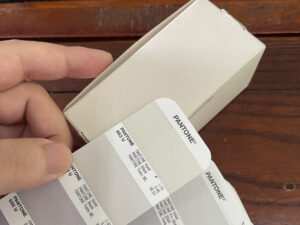
- Color fading or bleeding onto other garments (poor color fastness).
- Excessive pilling on friction areas like the inner thighs.
When evaluating fabric, brands should focus on specific performance data, not just the hand feel:
| Fabric Test | Why It Matters for Activewear |
|---|---|
| GSM Tolerance | Controls the weight, coverage, and opacity to prevent see-through issues during squats. |
| Stretch Recovery | Ensures the garment returns to its original shape and prevents knee/waist deformation. |
| Color Fastness | Maintains the visual appearance after intense sweating and frequent machine washing. |
| Pilling Resistance | Determines the long-term durability and quality perception of the product. |
For example, a 75% Nylon / 25% Spandex performance fabric may provide a premium “buttery” hand feel, but the final quality depends heavily on the raw yarn quality, the knitting tension, and the chemical finishing treatment used by the mill.
| Fabric Blend | Commercial Advantage | Potential Risk |
|---|---|---|
| Nylon + Spandex | Ultra-soft, premium “buttery” hand feel. Excellent for high-end yoga wear. | Higher material cost and dye minimums. |
| Polyester + Spandex | Highly durable, cost-effective, and holds vibrant sublimation prints well. | Can feel less premium; prone to holding odors if untreated. |
| Recycled Polyester | Aligns with modern sustainability positioning and eco-conscious marketing. | Requires strict GRS certification verification to avoid greenwashing. |
3. Sample Approval Does Not Guarantee Bulk Quality
This is one of the most common mistakes we see in the activewear production industry. A brand signs off on a perfect sample and assumes the bulk order will be identical.
The approved sample represents one finished product made by a master sample maker. Bulk production represents thousands of repeated processes on a fast-moving assembly line. The quality difference usually comes from two main areas:
Fabric Batch Variation The sample is often made using available stock fabric in the market. Bulk production, however, usually requires custom knitting and a new dye lot. Small differences in color shading, shrinkage rates, and fabric hand feel between the sample yardage and the bulk yardage can create noticeable changes in the final garment.
Production Environment Changes Sample rooms and bulk production lines operate differently. During mass production, sewing machine settings change, multiple operators with varying skill levels participate, and production speed increases significantly to meet deadlines.
This is exactly why experienced sourcing partners require a Pre-Production (PP) sample approval, conduct inline inspections during assembly, and execute a final quality inspection before shipping.
4. Low MOQ Does Not Always Mean Lower Risk
Many startup brands begin their sourcing journey by searching for “activewear manufacturer with low MOQ.” While minimizing inventory risk is smart, assuming that MOQ is solely controlled by the sewing factory is a mistake.
The real constraints in apparel manufacturing come from the broader supply chain:
- Fabric mills (minimum knitting weights)
- Dyeing houses (minimum vat capacities)
- Elastic and custom trim suppliers
- Packaging material suppliers
For example, a sportswear factory in China may agree to cut and sew 100 pairs of leggings for you. However, custom dyeing that specific fabric color might require a 300kg minimum from the dye house.
A professional sourcing strategy does not simply try to negotiate the MOQ down. It redesigns the supply chain to bypass the constraints. Possible solutions include using premium continuous stock fabrics during the market validation stage, sharing the exact same fabric colors across multiple styles (e.g., leggings and sports bras), and delaying customized trims until the product has proven market demand.
5. Pattern Development Is More Important Than Measurement Charts
A common assumption in garment manufacturing is: “The measurements are correct, so the fit should be correct.”
Activewear works differently. Because the garment must stretch and move with the human body, the pattern development process must carefully consider dynamic body movement, targeted compression levels, fabric elasticity, and recovery force.
A technically accurate measurement chart can still result in a terrible fit if the pattern lacks engineering. Common issues include waistband rolling during workouts, uncomfortable pressure points behind the knees, and insufficient chest support in larger sizes.
A reliable activewear supplier should be able to review your pattern and Tech Pack and provide technical feedback, rather than simply cutting fabric blindly based on your numbers.
6. Quality Control Must Happen During Production
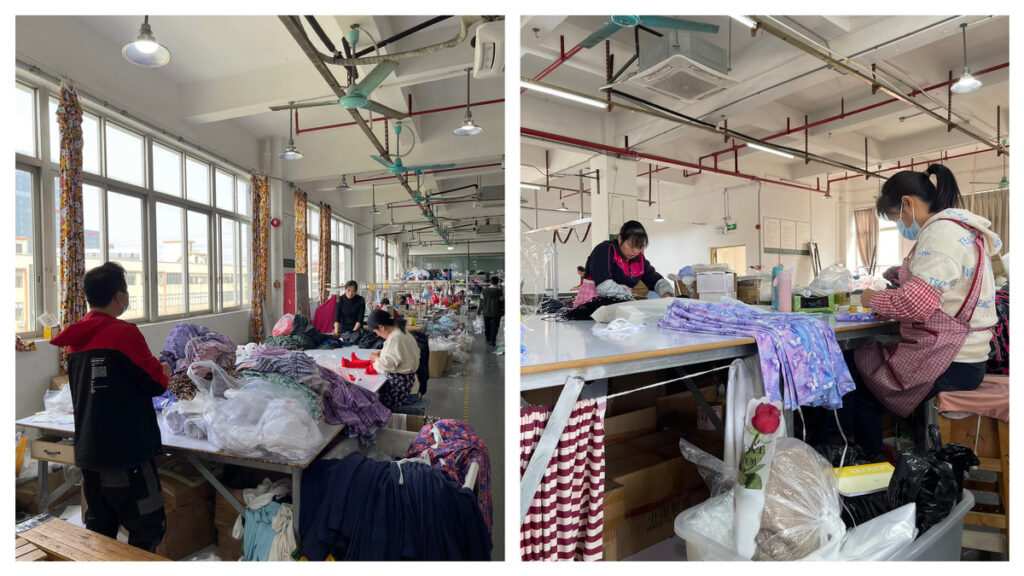
Many overseas brands only hire third-party inspectors to check the finished products once they are packed in boxes. By that stage, if a major sizing or stitching error is found, it is already too expensive and time-consuming to fix.
A stronger, more effective activewear quality control process includes three specific stages:
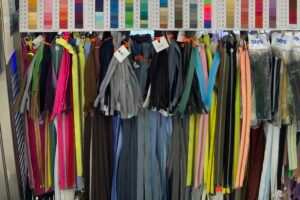
- Before Production: Verify that the bulk fabric matches the approved lab dips, check the quality of all trims (zippers, elastic bands), and confirm the construction details with the factory manager.
- During Production (Inline): Monitor the stitching tension on the flatlock machines, check the semi-finished measurements, and test the fabric performance on the assembly line.
- Before Shipment (Final): Verify the overall appearance, confirm the packaging matches the requirements, and check the final quantity against the packing list.
Early detection reduces production risks and prevents delivery delays.
7. The Right Supplier Is Not Always the Cheapest Supplier
When reviewing factory quotes, the lowest price always looks attractive. However, activewear production involves many hidden costs that a basic quotation sheet will not show.
Choosing a factory based purely on the lowest unit price often leads to expensive fabric development errors, endless sample revisions, unresolved quality problems, delayed seasonal deliveries, and inconsistent quality on repeat orders.
For brands looking to build a sustainable, long-term product line, supplier selection should focus heavily on technical capability, communication efficiency, production transparency, and the ability to maintain quality consistency over years of partnership.
How V7proX Supports Activewear Brands
At V7proX, our role is not simply connecting brands with a list of factories. We act as your on-the-ground sourcing partner to manage the entire manufacturing ecosystem.
We support overseas brands through the complete sourcing process:
- Activewear supplier evaluation and auditing
- Performance fabric sourcing and testing
- Sample development and technical feedback
- Daily production communication
- Inline and final quality inspection
- Shipment and logistics coordination
For overseas brands, the biggest challenge is usually not finding a manufacturer in China. The real challenge is reducing uncertainty and risk before investing in bulk inventory. A successful product launch depends on making the right supply chain decisions before production even begins.
(Ready to secure your activewear production? Contact our team to review your tech pack and discuss your sourcing strategy.)
FAQ
You should look beyond the price and check their specific experience with stretch fabrics, their investment in specialized production equipment (like flatlock machines), their pattern development capability, and their internal quality control processes.
Common options include Nylon/Spandex blends (known for a premium, soft hand feel) and Polyester/Spandex blends (highly durable and great for moisture management). The best choice always depends on your product positioning, performance requirements, and target retail price.
MOQ depends on the entire supply chain, not just the sewing line. It is influenced by custom fabric knitting minimums, dyeing vat requirements, custom trims, and branded packaging. While some factories accept 100 pieces, custom fabrics typically push practical MOQs higher.
Do not wait until the garments are finished. Use a structured QC process that includes raw material inspection before cutting, inline monitoring during assembly, and a final inspection before shipment to catch errors early.