One of the most expensive production decisions an apparel startup can make is insisting on an extremely low MOQ (Minimum Order Quantity). Ironically, reducing the order quantity often increases the manufacturing cost significantly more than choosing a larger production run.
During a sourcing review for an emerging streetwear brand, the founders were proud to have secured a factory willing to produce just 50 heavyweight hoodies. However, two months into development, their initial budget of $30 per unit had surged to $82. They encountered a “lesser vat fee” for dyeing, full screen-printing setup charges, and custom carton mold fees, eventually being forced to ship the micro-run via expensive air express.
No supplier acted unethically. The brand simply fell victim to the fundamental physics of industrial manufacturing.
1. Why Large Factories Often Decline Small Orders
A common misconception is that large factories reject small orders because they are unwilling to help smaller brands. The reality is considerably different.
According to supply chain efficiency studies, large apparel manufacturers are optimized for throughput rather than flexibility.
Large apparel manufacturers are optimized for throughput rather than flexibility. Every interruption introduced by a small production run reduces overall equipment efficiency (OEE), increases planning complexity, and affects delivery commitments for existing customers. In other words, declining a 50-piece order is often an operational decision—not a commercial one.
2. The Constraint Stack
The critical mistake buyers make is believing MOQ belongs to the garment factory. In reality, MOQ is only one manifestation of a broader constraint system.
Every production stage introduces a different type of operational constraint. Before a single garment is sewn, the order must survive a rigid hierarchy:
- Fabric Constraint: Limited by knitting machine efficiency.
- Color Constraint: Dictated by industrial dyeing vat capacities.
- Setup Constraint: Governed by print screen and embroidery digitizing costs.
- Assembly Constraint: Dependent on manual labor changeover times.
- Hardware/Packaging Constraint: Driven by custom mold minimums.
- Logistics Constraint: Bound by sea-freight volume thresholds.
The overall MOQ is determined by the most restrictive constraint—not by the garment factory. Experienced sourcing teams rarely optimize MOQ directly. They optimize the Constraint Stack.
3. The BOM Complexity Cascade & MOQ Pressure
If a 50-piece order for a basic hoodie triggers the Constraint Stack, attempting to produce a complex techwear jacket creates a BOM (Bill of Materials) Complexity Cascade.
Every additional customized component increases MOQ Pressure across the supply chain. If your Tech Pack calls for custom-dyed webbing, branded metal snaps, and specialized zippers, you activate separate supply chains. To produce 50 jackets, you may be forced to purchase 5,000 metal snaps (the hardware mold constraint) and 3,000 meters of webbing (the dye constraint). The sunk cost of these excess materials rapidly outpaces the Cut & Make (CM) labor cost.
4. The Eight Fixed-Cost Amplifiers
In micro-runs, you are not simply paying for the garment; you are paying to subsidize industrial inefficiency. These costs manifest through eight Fixed-Cost Amplifiers:
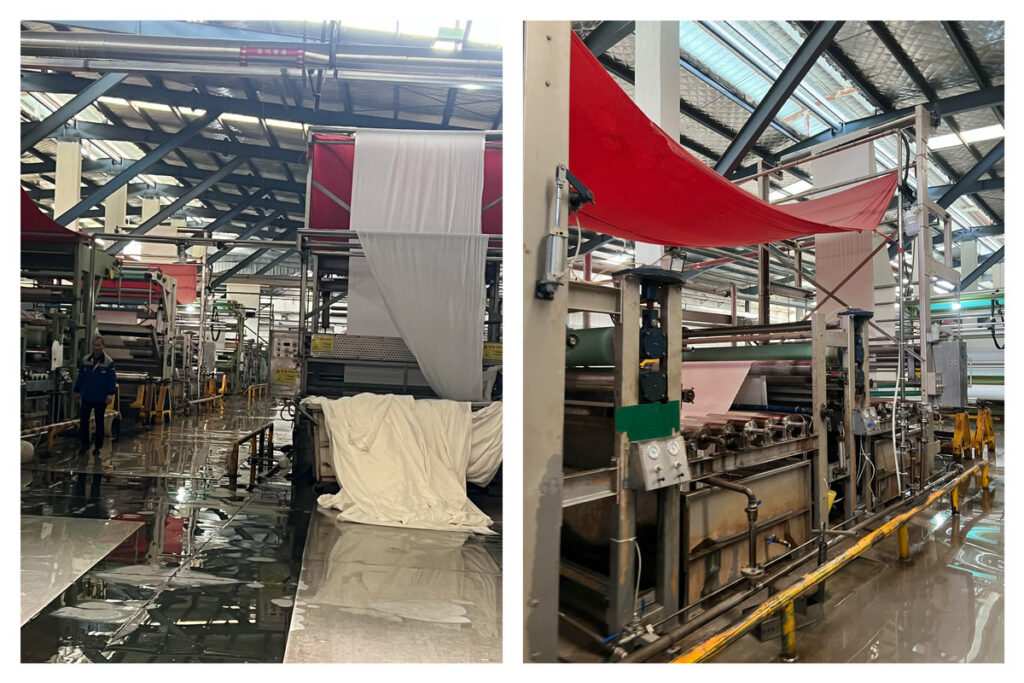
Amplifier #1 — Idle Capacity Cost Because most reactive dyeing machines used for cotton knits are designed around standard industrial vat capacities, running a half-empty machine consumes nearly the same utilities, chemicals, and operator time as running it full. The “lesser vat fee” is therefore not a penalty—it is simply the cost of underutilized industrial capacity.
Amplifier #2 — Production Changeover Cost Before the first garment is sewn, operators must change thread colors, adjust machine settings, verify the Tech Pack, and conduct trial sewing. These changeover activities consume the same amount of factory time regardless of whether the production run contains 50 garments or 5,000.
Amplifier #3 — Material Utilization Loss For 50 pieces, marker efficiency (the layout of pattern pieces on fabric) cannot be mathematically optimized. A significant percentage of premium fabric is converted directly into waste, which the buyer absorbs.
Amplifier #4 — Setup and Tooling Amortization Industrial production relies on spreading fixed setup costs across volume. If creating a screen-print mold costs $150, dividing that cost across 300 hoodies adds $0.50 per unit. Dividing it across 50 hoodies adds $3.00 per unit.
Amplifier #5 — Quality Assurance Allocation Professional quality control requires dispatching an inspector to perform standard Four-Point System fabric checks. The fixed day-rate of a QA professional drastically inflates the per-unit cost on smaller runs.
Amplifier #6 — Packaging Constraint Surcharges Factories supplying custom polybags or export cartons operate on MOQs typically starting at 1,000 pieces, forcing small runs to absorb heavy customization premiums.
Amplifier #7 — Freight Economics Shipping 50 hoodies internationally fails to meet the volume thresholds for economical LCL (Less than Container Load) sea freight, forcing brands into expensive air courier rates.
Amplifier #8 — Schedule Disruption Penalty Inserting a micro-run into an assembly line booked for tens of thousands of units disrupts the factory’s Production Gravity, often resulting in expedition fees.
5. Hidden Cost Comparison
The table below illustrates how Fixed-Cost Amplifiers distort the Cost Per Unit (CPU) between a micro-run and standard bulk production:
| Cost Driver | 50 pcs (Micro Run) | 300 pcs (Standard Bulk) |
|---|---|---|
| Fabric | High (Stock premium) | Low (Direct mill) |
| Dyeing | Very High (Idle capacity cost) | Normal |
| Screen Setup | High (Amortized over 50) | Low |
| QC Allocation | High | Low |
| Freight | Air (Expensive) | Sea (Economical) |
| Final CPU | $82 | $28 |
6. Constraint-First Decision Framework
Top-tier procurement directors do not ask if they should choose 50 pieces or 300 pieces. They evaluate their primary business bottleneck and select the corresponding constraint strategy:
| What is your bottleneck? | Core Objective | Operational Decision (Engineering Strategy) |
|---|---|---|
| CASH | Market Validation / Prototyping | Use premium stock fabric → Bypass custom hardware → Accept higher CPU. |
| SPEED | Fast Trend Drop / Influencer Capsule | Delay customization to post-processing → Utilize generic blanks. |
| CONSISTENCY | Evergreen Core Products | Custom knitting → Commit to 300kg MOQ → Lock Lab Dips. |
| MARGIN | Wholesale Distribution | Optimize throughput → Standard assembly line production. |
7. Engineering Around Constraints: The Professional Methodology
When facing high MOQs, the industry generally defaults to traditional, linear thinking:
➡️Negotiate lower MOQ
➡️ Factory accepts to win the order
➡️ Quality drops (Subcontracting to unregulated workshops).
At V7proX, we approach apparel sourcing through Supply Chain Engineering. Our methodology focuses on restructuring the order rather than forcing the factory to take a loss:
➡️Identify the constraint
➡️ Separate fixed cost
➡️ Standardize components
➡️ Consolidate demand
➡️ Reduce cost without reducing quality.
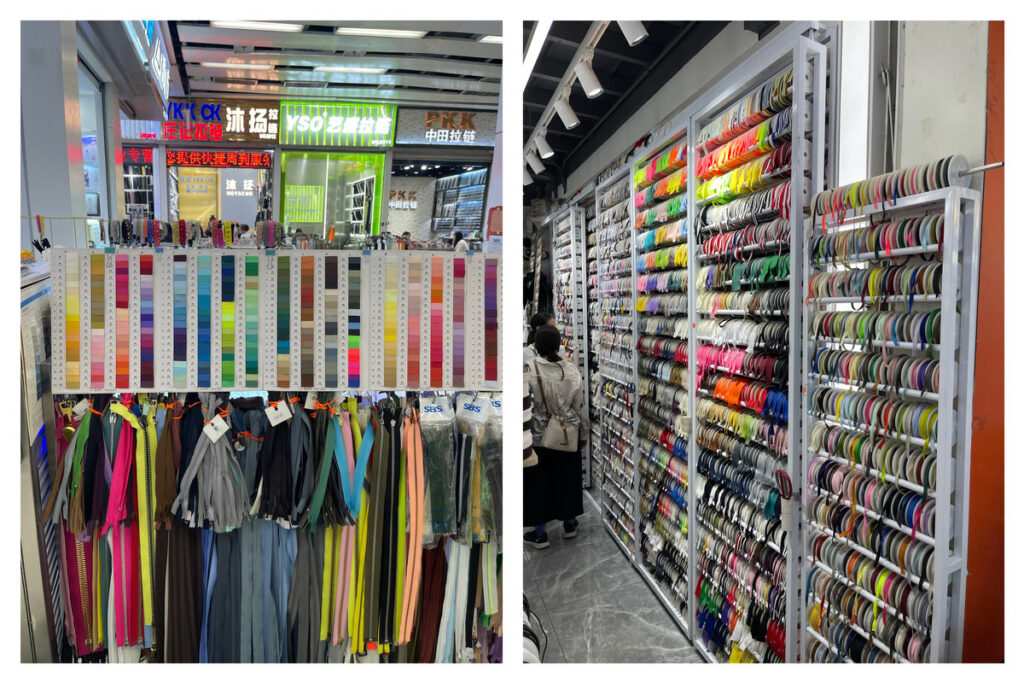
Instead of reducing the MOQ, we reallocate the MOQ. This involves precise supply chain architecture:
- Standardize trims across multiple styles: Use the exact same zippers, drawstrings, and webbing across jackets and pants to digest the hardware constraint collectively.
- Share the same dye lot across collections: Order one 300kg vat of premium heavyweight cotton, locking in color consistency, and cut it into four different 75-piece styles.
- Delay customization until post-processing: Utilize premium continuous stock fabric for the body, reserving high-end customization for low-MOQ digital printing or embroidery.
- Replace custom hardware with standard hardware during validation: Eliminate the 5,000-piece mold constraint by specifying high-grade, generic YKK hardware until the product achieves market fit.
In apparel manufacturing, MOQ is rarely the real problem. Constraint allocation is.
Successful brands do not negotiate around MOQ. They engineer around constraints.